
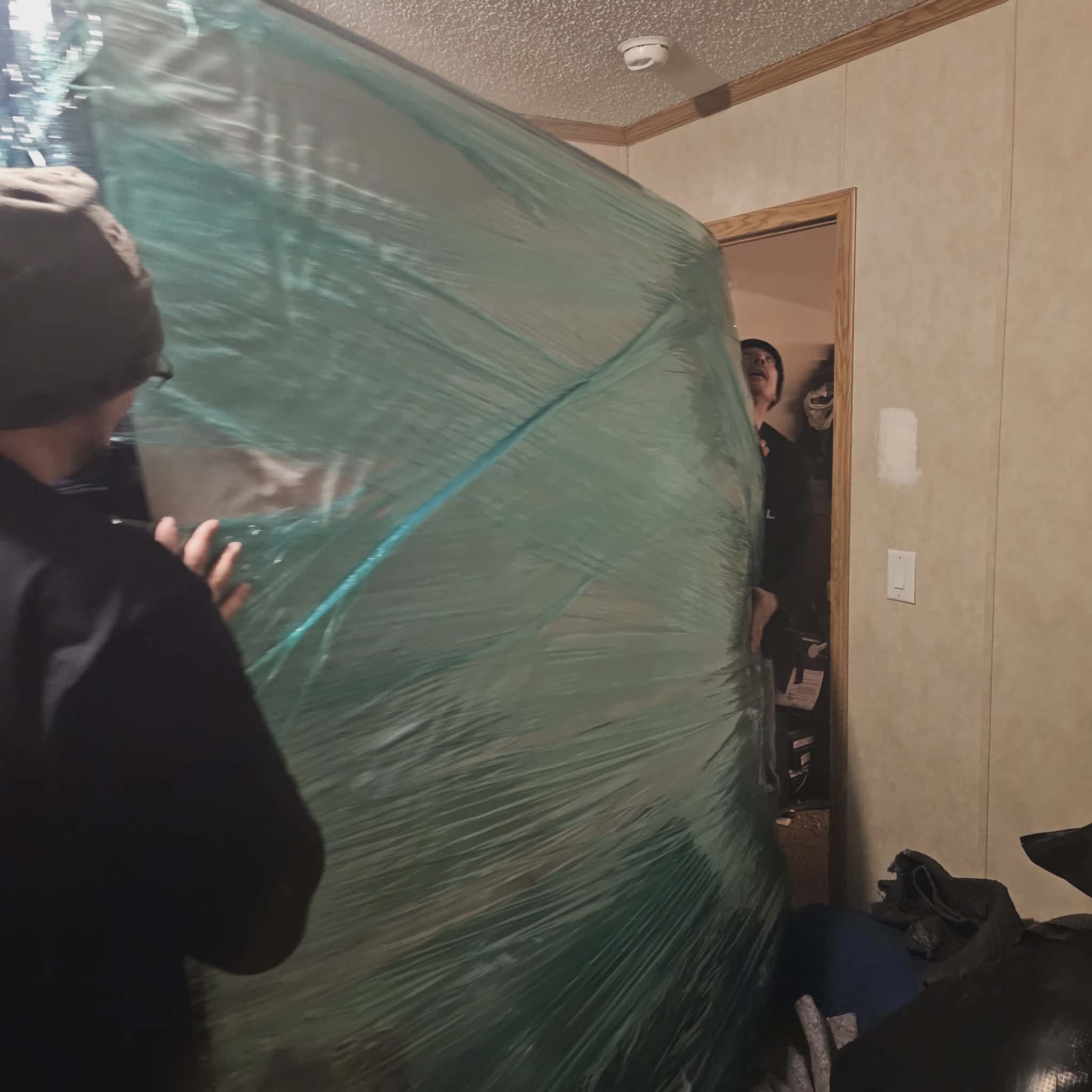
Some belongings need more than a box and a label. Dishes, electronics, and furniture with hardware each have their own packing approach — and a few small habits keep them safe, organized, and ready to reassemble on the other end. Here's how we recommend packing the items that need extra care.
Dishes & glassware
- Wrap dishes individually with packing paper or bubble wrap. Don't let plates touch each other directly.
- Pack plates upright on their edges — not flat. Edges absorb shock better than the flat surface, which is where cracks usually start.
- Cushion the bottom of the box with a layer of crumpled paper or a packing pad, and fill empty spaces so nothing shifts.
- Protect glasses individually and prevent them from touching or shifting inside the box.
- Clothing may supplement cushioning, but it shouldn't be the only protection for breakable items.
Clothing
- Wardrobe boxes let you move hanging clothes on the hanger — they're ideal for suits, dresses, and anything that wrinkles easily.
- Bags can group folded clothing, but a bag doesn't provide rigid protection. Don't use a bag as the only protection for items that can be crushed.
- For everyday folded clothing, medium boxes work well. Don't overload a box so it's too heavy to carry.
Electronics
- Photograph the back of each device before you unplug anything. You'll know exactly which cord goes where when you set it back up.
- Label cords and bundle them with their device. Keep remotes, power bricks, and accessories together.
- Use the original protective packaging when you still have it — it's the best fit for the device.
- For TVs, use a TV box or pad the screen and wrap the whole unit. Stand it upright, never flat.
Furniture hardware
When furniture comes apart, the hardware is the easy thing to lose — and the hardest to replace. Keep it organized and labeled:
- Put screws, bolts, and brackets in sealed, labeled bags.
- Photograph complicated furniture before disassembly so reassembly is easier.
- Agree where the hardware will travel — with the piece, in a parts box, or with the customer.
- Avoid taping hardware directly to finished furniture. Tape can leave residue or damage the finish.
Keep it manageable. Keep box weight manageable for whoever carries it — usually under 50 pounds. Use smaller boxes for heavy items like books. For more on choosing the right container, see our guide to choosing the right moving boxes & bins.
Keep valuables & essentials with the customer
Keep jewelry, cash, important documents, medications, and small irreplaceable belongings with the customer — not on the truck. Discuss larger valuable or specialty items with us beforehand so appropriate handling can be included in the job scope.
Packing help, disassembly, and reassembly are included when agreed upon in the job scope — they aren't automatically part of every move. Tell us what you need when you request a quote.
Planning a move?
Tell us what you're moving and what packing help you need.