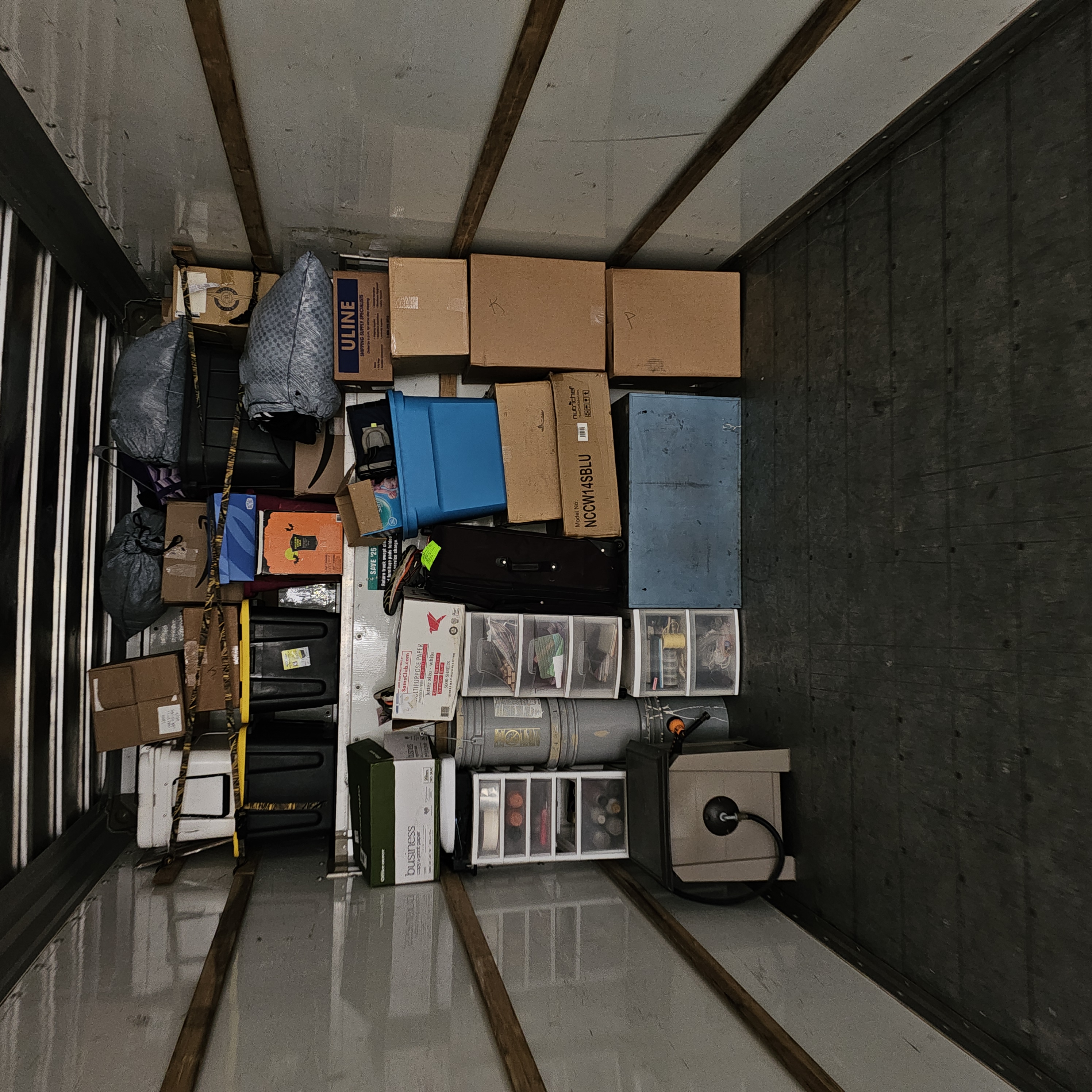
The boxes and bins you choose affect how safely your belongings travel — and how quickly the crew can load and stack them. Match the box to what's going inside: heavy items in small boxes, everyday items in medium boxes, and light bulky items in large boxes. That one habit keeps boxes from getting too heavy and helps them hold up during the move.
Match the box size to what's inside
- Small boxes — Use small boxes for heavy items like books, tools, and pantry goods. A full small box is still manageable to carry and stack.
- Medium boxes — Use medium boxes for general household items — kitchenware, clothing folded in stacks, garage odds and ends, and décor.
- Large boxes — Save large boxes for lightweight, bulky items such as pillows, bedding, lampshades, and winter gear. A large box full of books is a problem waiting to happen.
Use sturdy, dry boxes — and follow the printed weight limits
Boxes only protect your belongings if they're in good shape. Before you fill a box, check that the cardboard is dry and intact, with no soft spots or crushed corners. Many boxes print a weight limit right on the flap — respect it. If a box is rated for 65 pounds, don't load it past that point.
The same goes for bins and totes: cracked lids, broken latches, or bowing sides mean the container can fail when it's lifted or stacked. A sturdy box that's packed properly is far better than a larger box that's overloaded and straining.
Tape the top and bottom in an H pattern
Tape does its job when it follows the seams. On both the top and bottom of the box, run a strip of packing tape straight down the center seam, then a strip across each of the two open edges — that's the H pattern. It reinforces the seam where the box is weakest and keeps the flaps from popping open when the box is lifted or stacked.
Use real packing tape, not masking or duct tape. Packing tape is designed to stick to cardboard and hold under tension; the others peel off when the box flexes.
Extra tape won't rescue a bad box. Taping every seam twice doesn't fix soft, wet, or torn cardboard — and it doesn't make an overloaded box safe. If a box is weak or too heavy, repack it into smaller boxes instead of adding more tape.
Cardboard boxes, your own bins, and rented bins
Each option has trade-offs. Cardboard boxes are inexpensive, easy to label, and recyclable — but they can't get wet and they wear out if reused too many times. Customer-owned plastic bins are sturdy, water-resistant, and reusable for years of storage after the move — but they're an up-front cost and you store them afterward. Rented moving bins are strong and convenient for a short move — but they're returned by a deadline and aren't a long-term storage solution.
We don't offer box or bin rentals ourselves. If you need packing help, boxes, or supplies, tell us when you request a quote so we can discuss what's available and include it in your estimate.
Packing help, supplies, and disassembly are included when agreed upon in the job scope — they aren't automatically part of every move.
Planning a move?
Tell us what you're moving and what packing help you need.